
Intuition and AI
AI makes intuition more relevant than ever before

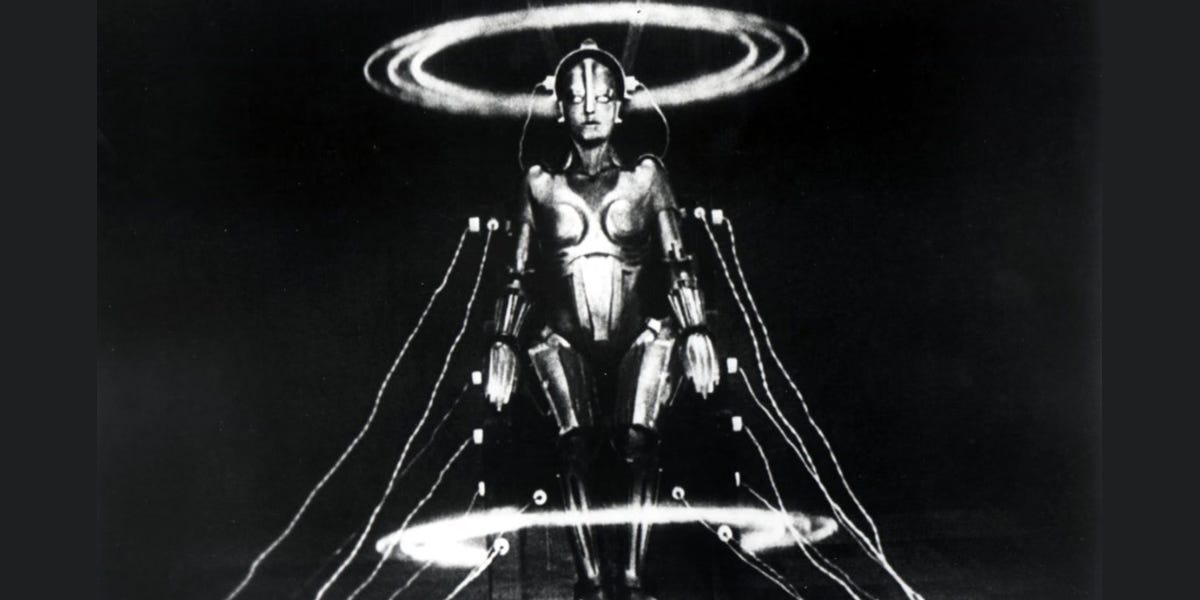
Geoffrey Hinton, the Godfather of AI, has been outspoken about the impact of Artificial Intelligence on society since he resigned from Google in 2023 so he could speak openly about its dangers. As recently as June last year he said:
‘I think for mundane intellectual labor, AI is just going to replace everybody. Mundane intellectual labor refers to white-collar jobs... I’d be terrified to work in a call center right now.’
Other jobs negatively affected will include paralegals, administrators, estimators, analysts, financial traders, bank clerks, data-entry clerks, book-keepers, accountants, journalists, and graphic designers. While it is true that front-line staff — those who interact directly with the public — will still be needed, the impact on many industries will be considerable.
Automation will affect more than intellectual labour. Self-driving vehicles will be on UK roads from next year; this will lead to self-driving trains, buses, taxis, and road-haulage vehicles. Automation will also affect warehouse and manufacturing jobs. Jeff Bezos has said that, through automation, Amazon expects to shed about 600,000 staff within 10 years.
Norbert Wiener, who founded Cybernetics (which is the basis of AI through ‘back-propagation’ and ‘feed-forward’), was outspoken about the impact of automation on society. He could see this as far back as the middle of the last century:
‘Let us remember that the automatic machine, whatever we think of any feelings it may have or may not have, is the precise economic equivalent of slave labor. Any labor which competes with slave labor must accept the economic conditions of slave labor. It is perfectly clear that this will produce an unemployment situation, in comparison with which the present recession and even the depression of the thirties will seem a pleasant joke.’
We have now arrived at the point where what might have seemed like a dystopian prophecy is quickly becoming a reality. If it is not yet clear, the coming few years will make it so. While this might seem like doom-mongering, there is a purpose behind it.
In addition to its impact on employment, there is the — very real — prospect of AI being used for social control. Even now, a casual search into the price of a holiday will result in adverts for holidays being included in your timeline. Whether we are aware of it or not, we are being monitored. The most likely response, once people become aware of this, will be resentment or even an attempt to disrupt it through direct action. The following was written 30 years ago:
‘To start with, there are the techniques of surveillance. Hidden video cameras are now used in most stores and in many other places, computers are used to collect and process vast amounts of information about individuals. Information so obtained greatly increases the effectiveness of physical coercion (i.e., law enforcement). Then there are the methods of propaganda, for which the mass communication media provide effective vehicles.’
This is taken from the Industrial Society and Its Future by Ted Kaczynski. You may remember him as the Unabomber.
The emergence of a new Luddite movement is almost inevitable. Society will then divide into those who regard technology as progressive and those who regard it as dehumanising. As the effect of automation on society — particularly on employment — becomes clear, the division will become pronounced. It follows that, in order to cope with the coming changes, it will be necessary to do more than just remain in employment; it will be necessary to retain a sense of perspective.
Logic demands that something is either good or bad, right or wrong, true or untrue. This comes from the fundamental principle of logic, which is the ‘law of the excluded middle’, and it means that something must be either A or B and there can be no middle ground. Logic, by its very nature, leads to polarisation. If — or rather when — large numbers of people are negatively affected by technology, we may feel compelled to take up arms against it. And yet we can no more affect the development of technology than we can change the course of the sea by shouting at it.
The technology we have is a product of logic and mathematics. This is because logic and maths are dominant in Western culture. The alternative — intuition — has existed largely as a subculture, through Neopaganism, the Heresies, and the Romantic Movement. If logic leads to polarisation, intuition is relative.
We can learn to moderate our responses to change by becoming more intuitive. We can learn to develop human empathy — the difference between a human interface and a chatbot — by becoming more intuitive. We can learn to think more creatively and more imaginatively by becoming more intuitive. The one thing AI cannot do is to think intuitively. We can respond to the coming years negatively, or through blind conformity, or regard it as a prompt to attend to the intuitive mind. The Latin phrase ‘praemonitus, praemunitus’ means ‘forewarned is forearmed’; we cannot prevent what is to come but we can prepare for it.
(Graphic: still from Fritz Lang’s Metropolis, 1927)