
Intuition & Invention
The how and why of generating new ideas

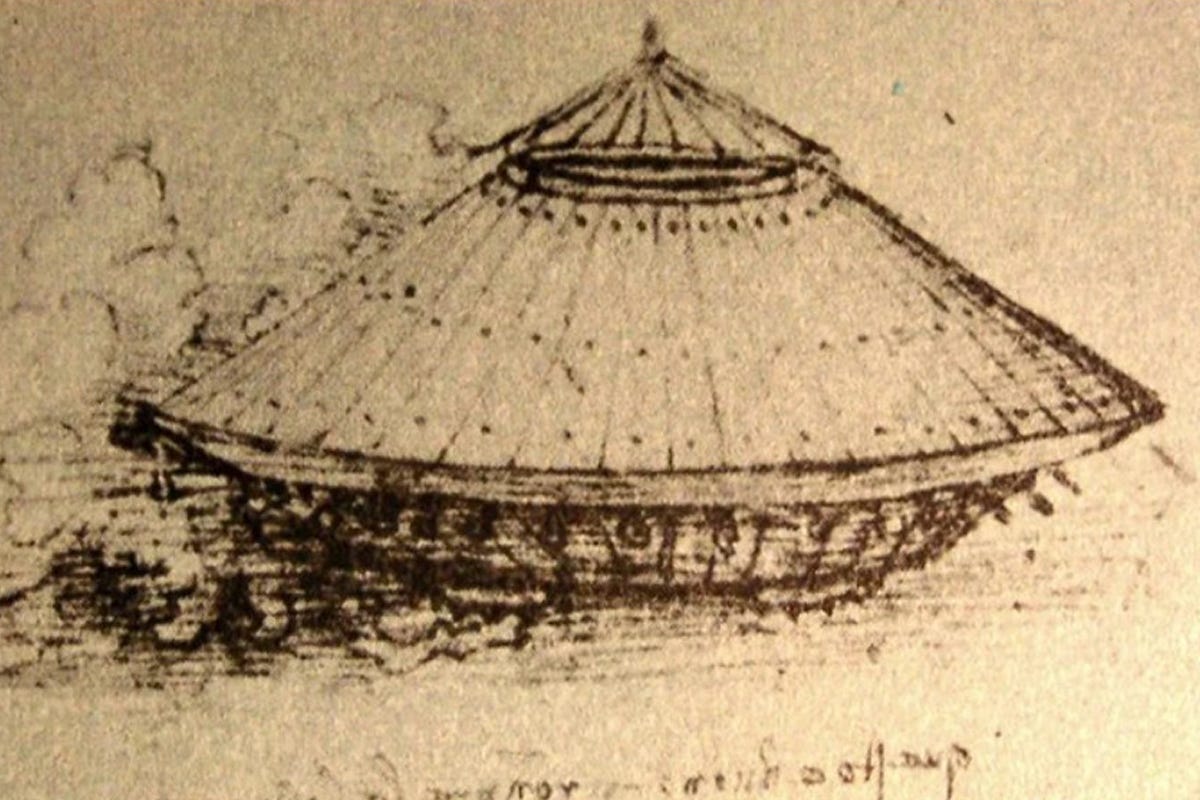
We have given too little attention to the process that leads to invention. There are no courses, no university degrees, nor any private tutors to teach the skill of invention. This is in spite of the fact that the whole of the modern era - energy, travel and communication - is born out of invention. And yet for all this we treat invention as a lucky accident, and assume it happens in the way a lottery win ‘happens’.
In terms of studying the inventive process, most of the accounts we have are anecdotal or second-hand. James Watt (1736 - 1819) is said to have been inspired to improve the existing steam engine by observing how the steam in a kettle forced the lid to rise and fall. Eli Whitney (1765 - 1825) had the idea for the cotton gin after observing a cat attempting to pull a chicken through a fence, only to separate it from its feathers. And James Hargreaves (1720 – 1778) had the idea for the spinning jenny after observing a thread-wheel continue to revolve after it had overturned and landed on the floor.
Others had observed kettles, cats, and thread wheels before without this resulting in an inspired idea, and so it follows that there is something more at play than mere observation; there is very clearly an outlook or attitude of mind which is conducive to invention.
Many inventors, while noted for a single idea, often had more than one patent to their name. Nikola Tesla had nearly three hundred, and Thomas Edison had over a thousand. Shunpei Yamazaki (b. 1942), a Japanese inventor, currently has more than 5000 patents registered. It follows that, not only is there a method, but those who are familiar with the method clearly have an increased capacity to turn up new ideas.
Tesla was one of the most significant inventors of the twentieth century. His inventions included the alternating current motor, the neon light, the remote control and wireless energy. He is also the uncredited inspirer of radar, the radio and robotics. Tesla possessed an eidetic imagination, or the capacity to see visually what existed only in his mind. Many of his inventions were not drawn on paper, but verbally described to the engineers who then went onto make them. He gave an account of the inventive process to his biographer, John J. O’Neill, who recorded it in the book Prodigal Genius: The Life of Nikola Tesla (1944):
‘Here, in brief, is my own method: After experiencing a desire to invent a particular thing, I may go on for months or years with the idea in the back of my head. Whenever I feel like it, I roam around in my imagination and think about the problem without any deliberate concentration. This is a period of incubation.
‘Then follows a period of direct effort. I choose carefully the possible solutions of the problem. I am considering, and gradually center my mind on a narrowed field of investigation. Now, when I am deliberately thinking of the problem in its specific features, I may begin to feel that I am going to get the solution. And the wonderful thing is, that if I do feel this way, then I know I have really solved the problem and shall get what I am after.’
What is interesting about Tesla’s account is that it is not merely intellectual, but also emotional. To be able to consider what does not yet presently exist requires imagination, and imagination is by no means dry and analytical. To be imaginative means to be open-minded, and that means to be able to entertain ideas which would otherwise appear absurd to an analytical mind.
The necessity for open-mindedness might explain why many of the inventors of the Industrial Revolution were often untrained amateurs or were employed in entirely unrelated fields. It is possible that being untrained allowed them to consider ideas an expert might have rejected as unnecessary or impractical.
The steam engine was invented by Thomas Newcomen (1664 - 1729), an ironmonger; the seed drill was invented by Jethro Tull (1674 - 1741), a farmer; the marine chronometer was invented by John Harrison (1693 - 1776), a carpenter; the flying shuttle was invented by John Kay (1704 - 1779), a reed maker; the spinning jenny was invented by James Hargreaves (1720 - 1778), another carpenter; the spinning frame came from Richard Arkwright (1732 - 1792), a barber; Samuel Crompton (1753 - 1827), who gave us the spinning mule was a musician, and the cotton gin was invented by Eli Whitney (1765 - 1825), a teacher.
A degree of interest in the problem at hand is clearly essential to the inventive process - there is little point in trying to come up with a new flying machine without some knowledge of air resistance or gravity - and yet too much familiarity with existing ideas can also be a barrier to the freedom of thought needed to consider what is presently deemed untenable or even impossible.
This can be seen in the way inspired ideas arrive. The instant arrival of the idea must be preceded by a period of reflection, but this must be open-minded reflection rather than analysis. What results, if it is done properly, is a single flash of insight, very much like the eureka moment of Archimedes. As with invention, there are very few accounts of the insight process. An interesting example can be found in the book The Tao of Physics (1975) by the physicist Fritjof Capra:
‘These insights tend to come suddenly and, characteristically, not when sitting at a desk working out the equations, but when relaxing, in the bath, during a walk in the woods, on the beach, etc. During these periods of relaxation after concentrated intellectual activity, the intuitive mind seems to take over and can produce the sudden clarifying insights which give so much joy and delight to scientific research.’
Capra’s account makes it clear that insight is a product of the intuitive rather than the logical mind. It is perhaps for this reason that the inventive process is so little understood. The education system teaches us to think logically, not intuitively. In a multiple-choice exam, we are presented with a question and four possible answers; we work through each of the answers and try to find fault with them, and then pick the answer which is free from error; in an exam, novel answers get no points.
To think intuitively we have to think in terms of images rather than in terms of definitions of right and wrong. Imaginatively we can grasp, instantly, a highly complex situation without needing to analyze it. Johann Goethe (1749 - 1832), the German writer whose interests included botany, anatomy, and the study of colour, was gifted with a number of insights in his lifetime. He referred to this as an ‘apercu’, or an instantly illuminating idea:
‘They are properly what we call in scientific and poetic matters, an apercu; the perception of a great maxim, which is always a genius-like operation of the mind: we arrive at it by pure intuition; that is by reflection, neither by learning nor tradition.’
That is why inventive ideas often arrive suddenly, as a kind of revelation, and can leave the recipient feeling flabbergasted or overwhelmed, causing them to burst into laughter or even tears on their arrival. If logic is dry and mechanical, intuition is very clearly emotional.
Just as we can learn to think logically or mathematically, we can also learn to think intuitively. Just as there is a logical method, there is also an intuitive method. Creative types tend to be highly imaginative, often driven by enthusiasm and, at times, often naivety. All of this indicates that imagination overrides the critical faculty. It is no accident that Leonardo da Vinci was both a notable artist and a notable inventor; imagination drove his thinking.
It is not necessary to trade off logic for imagination - a working prototype requires the capacity for both - but it is necessary to value imagination equally with logic, at least if we want to increase our capacity for inspired ideas.
In lieu of any formal training, we can improve our inventive capacity by becoming more familiar with the intuitive mind itself. We have intuitive thoughts and ideas all the time, but pay little attention to them. We have minor insights into people, into their motives and nature, and into everyday events and familiar objects. Such thoughts can occur at times when we are not thinking about the subject directly, but often when we are walking along a road, or preparing a meal, or observing a child playing with a piece of wood, as did René Laennec (1781 - 1826), who invented the stethoscope.
We can also learn to value imagination over criticism. If the logical method teaches us to be critical, the intuitive mind teaches us to be imaginative. With imagination there is often no right or wrong, only possibility. This is why a new idea may appear nebulous at first, as though it is being whispered to us, like Echo to Narcissus.
It is an extraordinary fact that, in spite of the whole of the modern era being based on invention, society does not value the inventor in the way that it values bankers or businessmen. It is telling that if the subject is even discussed, it is purely in economic terms.
It would be useful, at least for future generations, for present day inventors, would-be, amateur or recognized, to make notes of their thought processes, particularly to those applied to the production of new ideas. Just as the outer world can be studied, the inner world of thinking can also be studied. The records of the inventors can therefore be of interest to anyone who studies creativity.
Inventors are too often dismissed as cranks or eccentrics, or at best as the lucky recipient of a chance idea. If society will not take the inventor seriously, then perhaps inventors should take themselves seriously. Write down your thoughts; make records of the creative process. Just as a rich history of war exists, a rich history of invention can come into being. Your thoughts matter, even if others cannot see it.
(Graphic: Leonardo da Vinci’s ‘Fighting Vehicle’)