
The Necessity for Intuition
Its importance in the Modern Era

The hallmark of the Modern Era is change. There has always been change - history is the record of change - but the rate of change in the Modern Era is unlike any before.
Change is more than just new fashions and new appliances, it is changes in social conventions, customs, and expectations. Ten years ago the word ‘queer’ was a slur; then it became a taboo, and now it is a positive attribute. There was a time - and not long ago - when a school-leaver was expected to choose a lifetime career; now a school-leaver may find employment in an industry that doesn’t exist yet. We live with change and barely notice it.
Perhaps more importantly, change affects what we believe is right and wrong. At present, for example, we believe in the idea of progress through technology. This is because, until now, technology has delivered mostly positive benefits, including increased wealth and production, improved forms of communication and travel, the development of medicines and vaccines, greater access to education and information and so on. This is due to change.
Warnings about the impact of AI on unemployment have come, not from social commentators, but from some of the leading figures in the industry. Jeff Bezos has said that, through automation, Amazon expects to shed about 600,000 staff within 10 years. Sam Altman, CEO of Open AI, said:
‘AI will change the world... and the job market. It’s a mistake to think this is just going to be an extension of previous tech revolutions. This one is different, and the speed of displacement will be very fast.’
Geoffrey Hinton, godfather of AI, had the following to say in the Economic Times in November last year:
‘I think the big companies are betting on it causing massive job replacement by AI, because that’s where the big money is going to be...If we continue to use AI to increase profits for the few, we’re going to end up in a very bad place.’
And Norbert Wiener, the founder of Cybernetics on which automation is based, wrote about the impact of automation on unemployment as long ago as in the 1950s, in The Human Use of Human Beings:
‘It is perfectly clear that this will produce an unemployment situation, in comparison with which the present recession and even the depression of the thirties will seem a pleasant joke.’
While it is quite possible this may be an overly pessimistic view, it would be foolish to write off such concerns without any form of consideration. Hinton and Altman have both called for some form of Universal Basic Income to deal with the impact. It is unlikely, owing to its association with Socialism - presently regarded in a negative light - that this will be accepted as a political and economic necessity in time to offset the impact of automation on employment. Mass unemployment will divide society into those who see technology as a benefit, and those who regard it as a threat.
It follows that, as automation begins to impact on unemployment in a very real way - and we’re looking at a handful of years at most - a New Luddite movement will emerge. What is more, there will be no ‘sitting on the sidelines’ on this issue. Either we will be affected directly by being made unemployed, or we will be affected indirectly through recession, dissent, and the likelihood of it being governed through the use of electronic surveillance and crowd control. Some methods are already in place, such as Smart Control Management, Predictive Artificial Intelligence, and Active Denial Systems.
If this seems dystopian, it’s because it is. The problem is not that it might happen - it most certainly will - but that, at present there is little being done to prevent it from happening. Our political, economic, scientific, and even our cultural leaders seem oblivious to any possibility of a negative outcome to the unrestrained and unconditional development of technology.
Taking all of the above into consideration, we might ask what we can do as individuals. We can, of course, join the Luddites, but the nature of power in the hands of the few - Jeff Bezos, Mark Zuckerberg, Larry Page, Elon Musk, and Peter Thiel - means that any opposition is likely to be frustrated by a greater force with greater funds, and therefore short-lived.
Or we can adapt. We can learn to do what AI cannot do, and what AI cannot do is think intuitively.
AI can only process the information that already exists. It can appear to offer new solutions, but these are solutions based on current thinking. It cannot create anything truly new, as anyone who has ever used it to generate a graphic will testify that it creates nothing but cliches. To generate genuinely new ideas we have to think imaginatively and intuitively.
This means that, if we want to remain in employment in the coming years, we will have to develop our intuitive ability. This can be done in the same way that we might develop an artistic or mathematical ability, through deliberate practice and attention. The Modern Era, whether we are ready for it or not, will demand that we attend to our intuitive ability, or find ourselves - besides being unemployed - frustrated, angry, and unable to cope with the changes that are to come. The choice is ours.
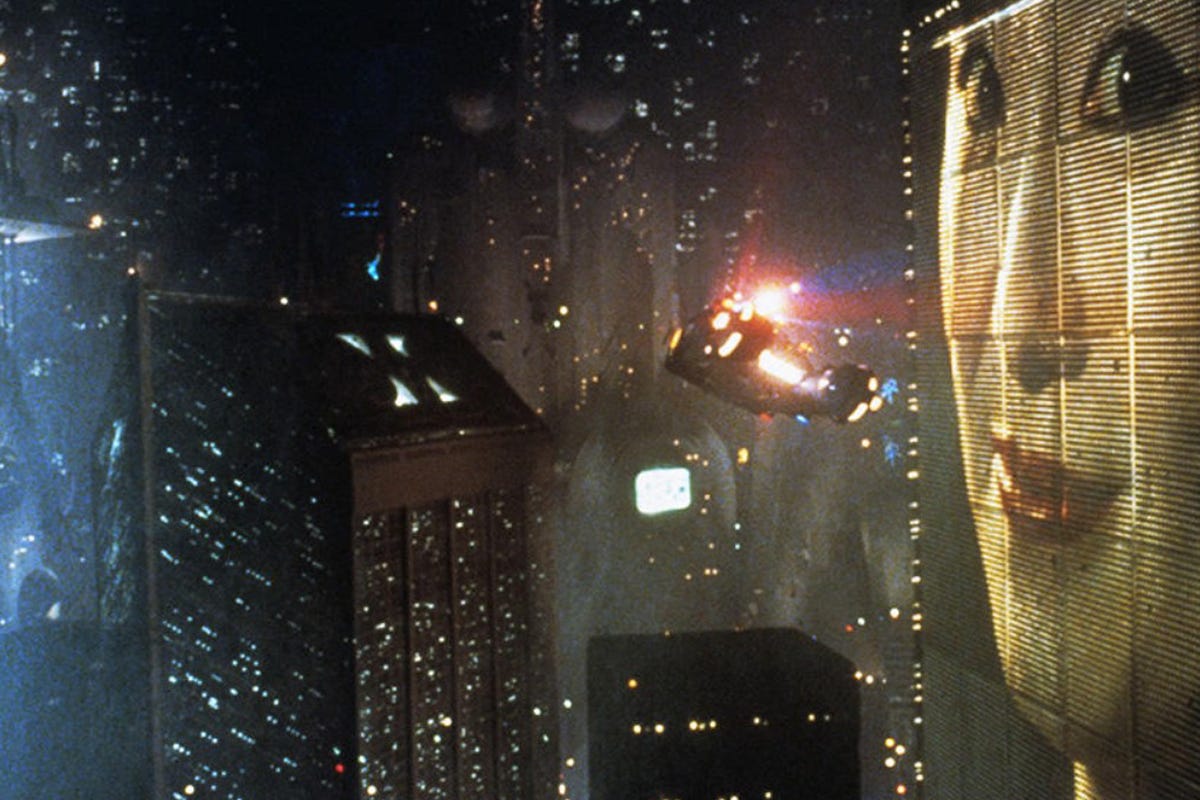
(Graphic: Still from Ridley Scott’s Bladerunner, 1982)